Artificial intelligence (AI) refers to computer systems that perform tasks associated with reasoning, perception, language, or pattern recognition.
Definition
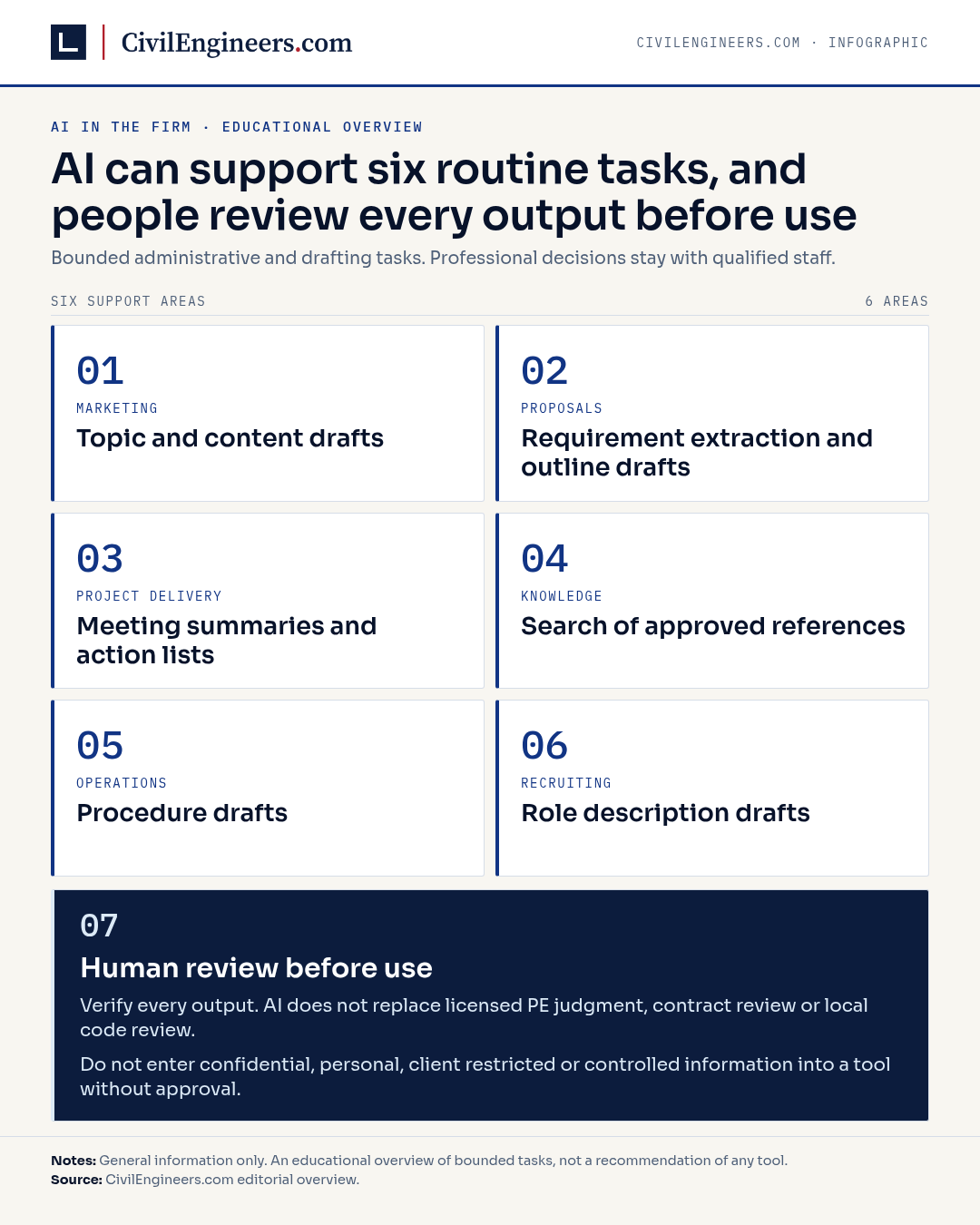
AI is a broad category of computer systems that perform tasks such as recognizing patterns, classifying information, processing language, or generating content. Civil engineering firms may use it to sort records, draft text, identify items for review, or support selected analyses. Whether a task is appropriate depends on the system, input data, project context, privacy requirements, and the consequences of an error. Owners may track subscription, setup, training, review, and correction effort when assessing costs and workflow changes. AI is not one specific tool, and its outputs are not inherently accurate, complete, or professionally approved. It does not replace a licensed engineer's judgment or transfer responsibility for work to the software. A useful process defines permitted inputs and tasks, protects client information, and assigns qualified people to check results before use. See NIST's AI resources for a framework for understanding AI risks and uses.
How owners use it
- Identify repetitive tasks where staff can review AI output before it enters project records.
- Set internal rules for permitted tools, client information, and review responsibility.
- Example: 5 hours saved on drafting - 2 hours of review = 3 net hours saved.

