Generative AI produces text, images, code, or other content in response to prompts or other inputs.
Definition
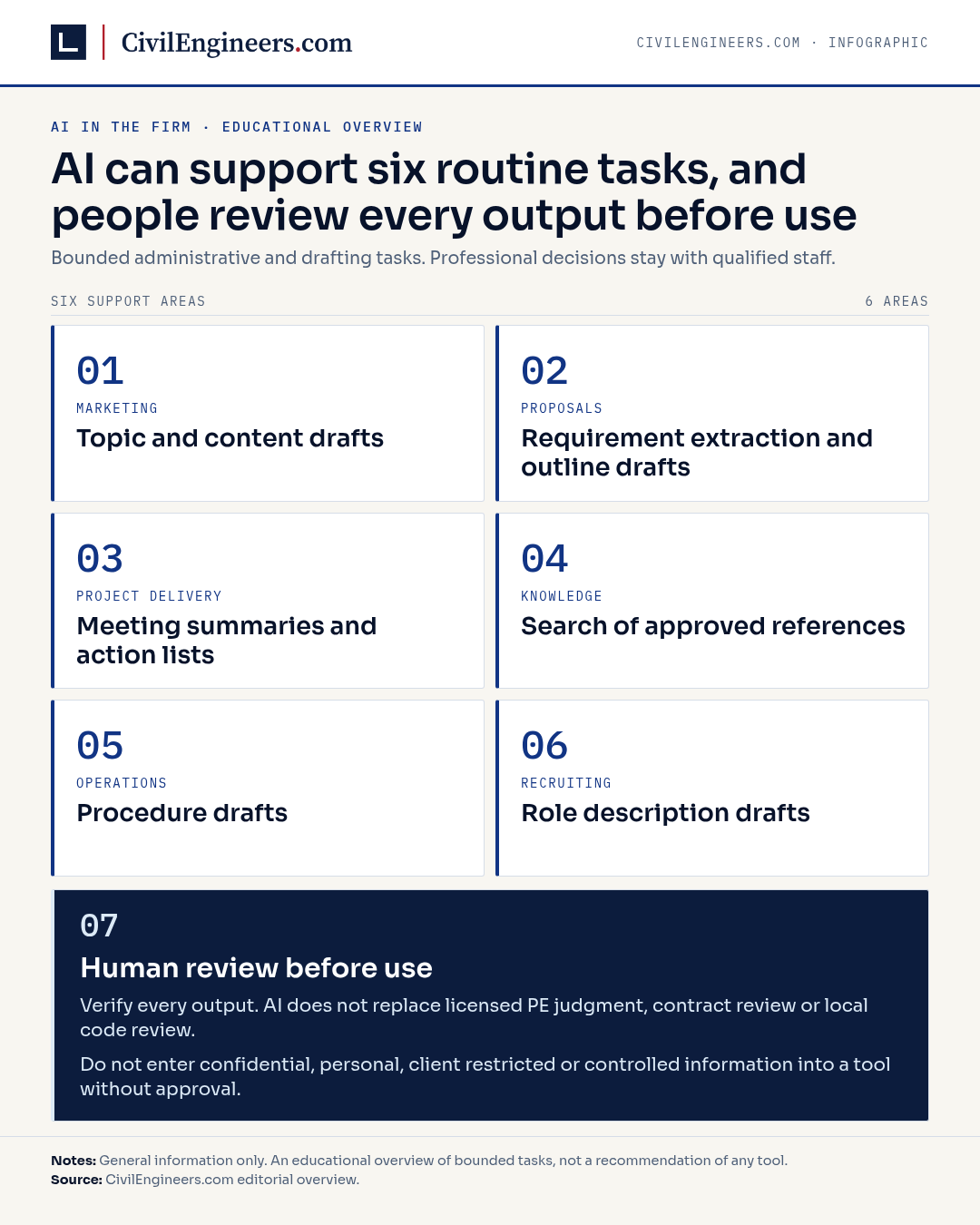
Generative AI systems produce new content, including text, images, code, or summaries, based on prompts and other inputs. A civil engineering firm might use one to draft proposal language, organize notes, or create an initial outline for a report. The work still includes preparing suitable inputs, checking outputs, correcting errors, and confirming that the content fits the contract and project context. Firms may account for tool subscriptions and staff review time differently. Generative AI is not a source of verified facts simply because an answer sounds confident, and it does not inherently understand site conditions or professional obligations. Its output may be incomplete, inaccurate, or fabricated. Data handling also varies by tool and service, so the firm should understand relevant terms and internal rules before entering client material. A qualified reviewer remains responsible for deciding whether generated content is usable. See NIST's AI resources for guidance on evaluating AI systems and risks.
How owners use it
- Choose drafting or organizing tasks with a clear person responsible for checking the result.
- Include review and correction time when estimating an AI-assisted workflow.
- Example: 3 hours of first-draft work reduced to 1 hour, plus 1 hour review, saves 1 hour total.

