Due diligence is the review of a business and its records before a transaction or other significant decision.
Definition
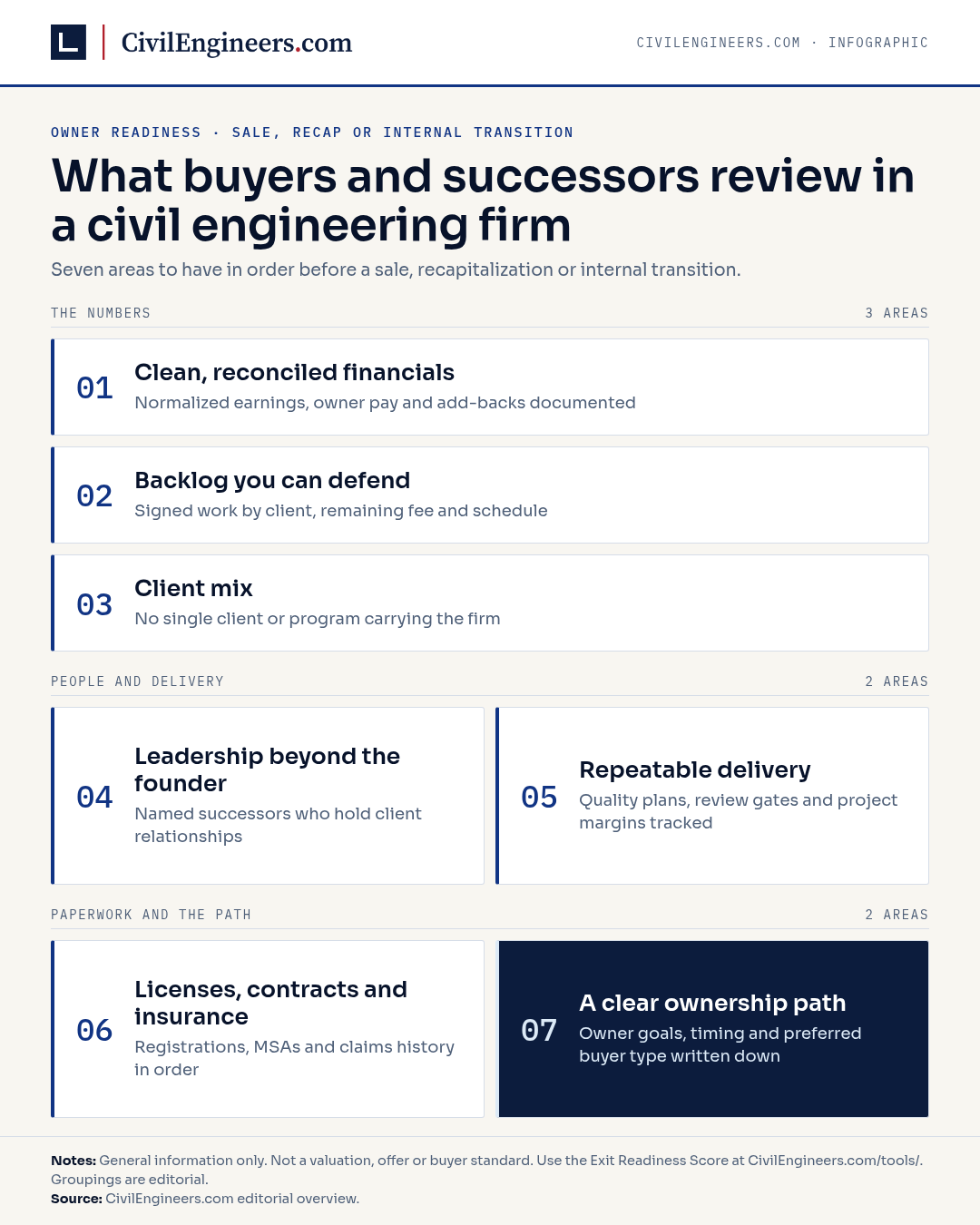
For a civil engineering firm, due diligence can cover financial performance, client concentration, contracts, backlog, active projects, staff, technical records, insurance, claims, compliance, and operations. The review’s scope depends on the transaction, the parties, and the questions they need answered. Buyers may use findings to assess value, adjust proposed terms, request more information, or decide whether to proceed; sellers may use the process to explain records and resolve questions. Due diligence is not a guarantee that every issue will be found, nor is it the same as an audit or a promise about future results. The quality of conclusions depends on the information available and the work performed. Owners often use a controlled data room to organize materials and manage access. Resources on ACEC can provide industry context, while each review is specific to the business and transaction.
How owners use it
- An owner organizes financial statements, project commitments, insurance records, and client agreements for a buyer’s review.
- A buyer compares reported revenue with project records and asks about unusual items or gaps.
- A diligence list has 40 requested files and 32 are supplied: 40 - 32 = 8 files remain outstanding.
- The parties track findings that may affect deal terms, timing, or transition planning.

