Published by CivilEngineers.com, a Family Office Club project. Built from the published practitioner and industry sources listed below. General education only. How we source.
A quality of earnings review examines historical financial results to assess recurring operating performance and the basis for reported earnings.
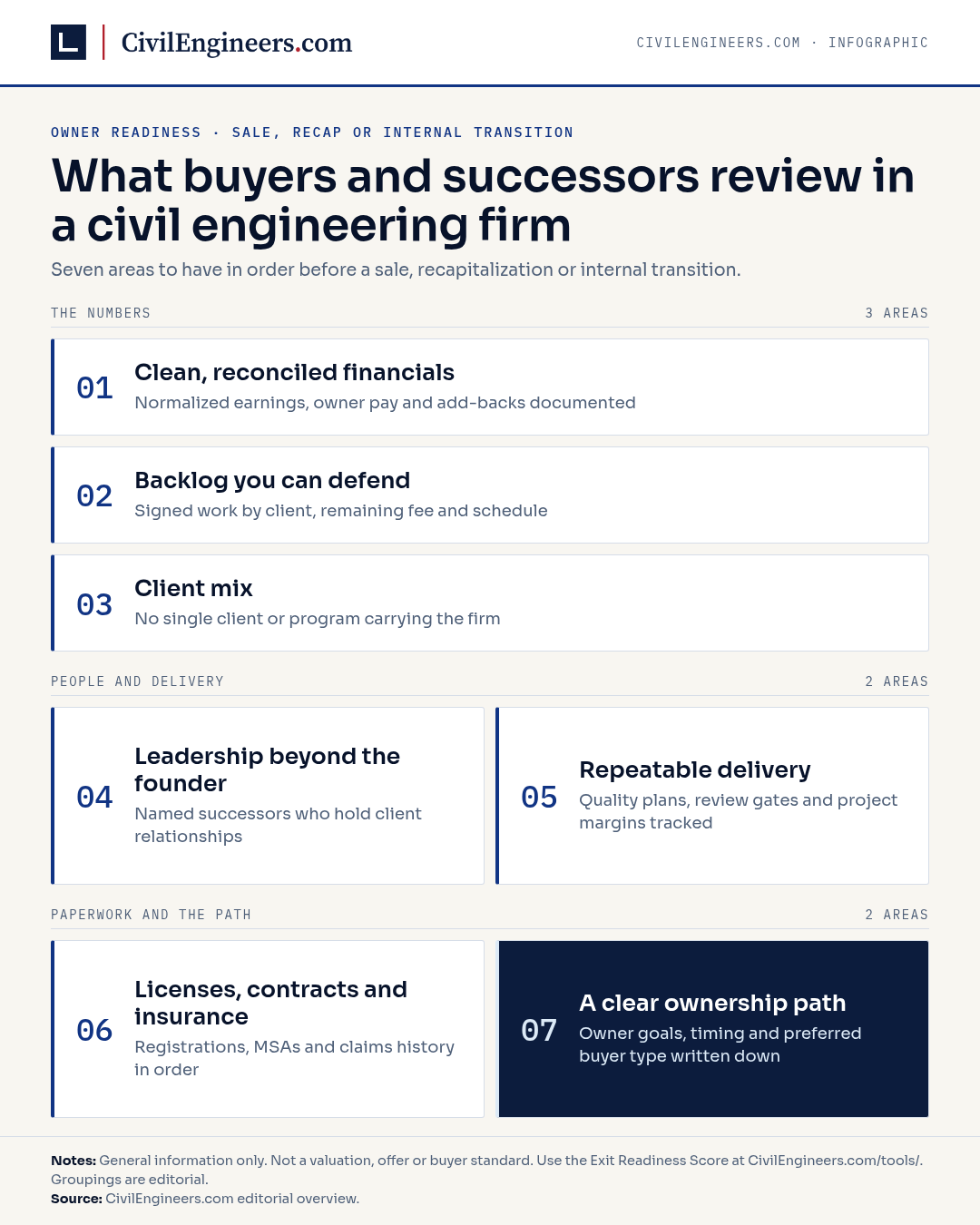
Definition
A quality of earnings (QofE) review for a civil engineering firm typically examines historical revenue, costs, working capital, and proposed adjustments to understand the pattern and support for reported earnings. Reviewers may examine project accounting, labor charges, unbilled work, write-offs, and unusual expenses, depending on the scope. Different reviewers may use different periods, classifications, and adjustment criteria, so the result is not a single universal figure. Owners and buyers use the analysis to discuss which earnings may be recurring and how financial results relate to operations. A QofE review is not an audit, a valuation, or a guarantee of future performance. Its conclusions depend on records, methods, and assumptions. The AICPA-CIMA provides resources on accounting and finance, while a transaction review is tailored to the business and questions being examined.
How owners use it
- An owner uses the review to explain how project revenue, labor costs, and unusual expenses appear in reported results.
- A buyer compares proposed earnings adjustments with supporting invoices, payroll records, and project files.
- Reported EBITDA is $700,000 and accepted adjustments total $50,000: $700,000 + $50,000 = $750,000 adjusted earnings under that review’s definitions.
- The parties use the findings to clarify earnings assumptions during valuation and transaction discussions.
What earnings are you asking a buyer to accept? An M&A adviser puts sustainable earnings before the valuation multiple. For proposed EBITDA adjustments, the adviser asks whether the revenue or expense would continue under normal ownership after the deal. Ask your CPA and M&A adviser what documents support each adjustment. Are exceptional revenues receiving the same scrutiny as expenses labeled temporary?
A weak period needs an explanation. The adviser distinguishes delayed projects from lost clients and calls for reconciling historical results with operating results and forecasts.
The same adviser says buyers check receivable aging, work in progress, write-offs and operating cash flow against reported earnings. Project timing may affect cash conversion. Your CPA can help explain any deterioration and identify what remains unresolved.
Backlog also needs examination. The adviser asks whether work is funded, committed, profitable and deliverable, and distinguishes actual assignments from an indefinite-delivery, indefinite-quantity contract ceiling. What staffing and conversion assumptions support the forecast?
These are discussion questions for your CPA and M&A adviser. This glossary entry does not determine your firm's sustainable earnings or transaction value.

