Qualifications-based selection ranks firms on professional qualifications before the client negotiates compensation with the highest-ranked firm.
Definition
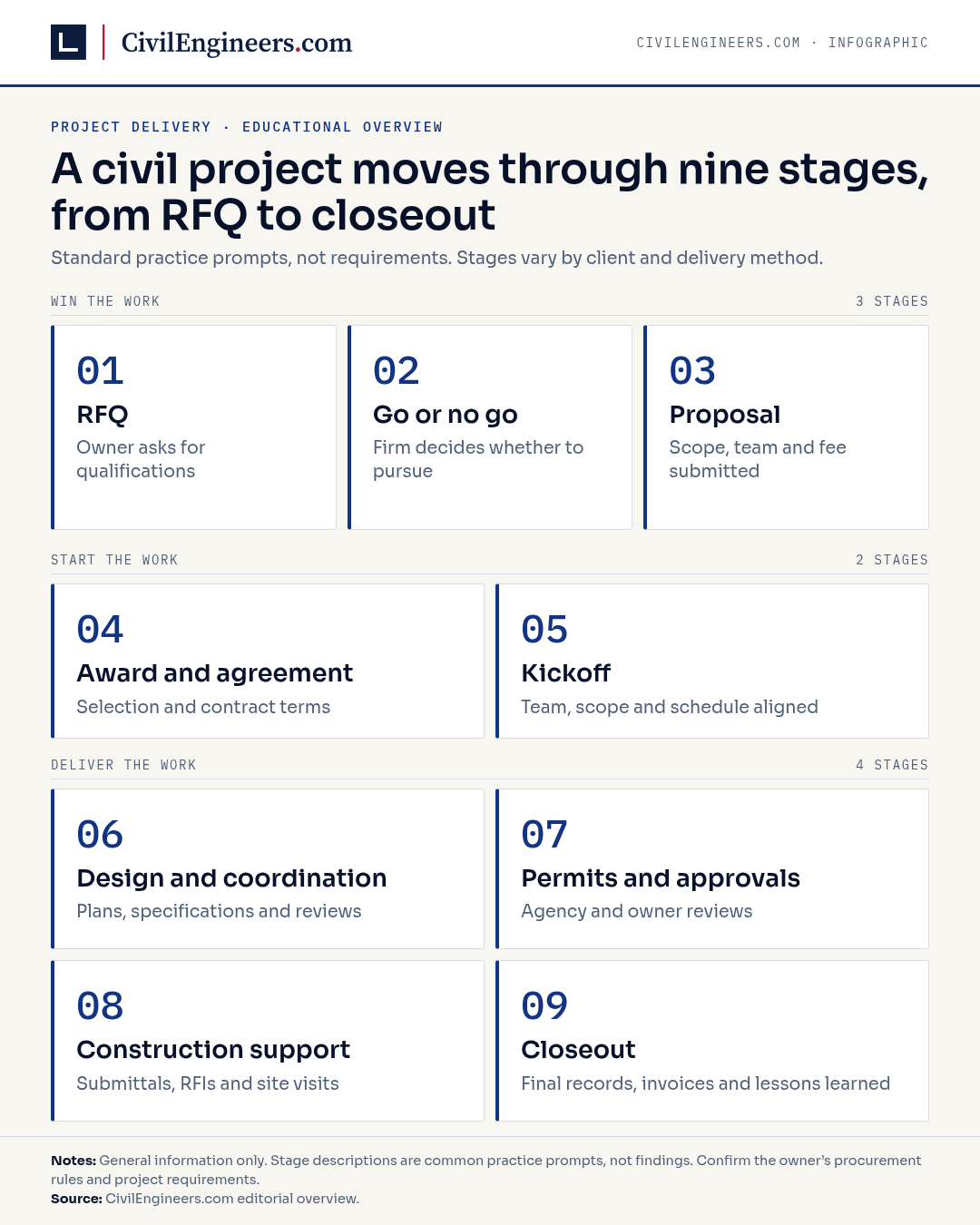
Qualifications-based selection, or QBS, is a procurement process in which a client evaluates firms using factors such as relevant experience, staff credentials, project approach, and capacity, then negotiates compensation with the highest-ranked firm. The solicitation and governing rules define the evaluation and negotiation steps. QBS does not mean that a firm works without an agreed fee, nor does it mean price is irrelevant to the eventual agreement. For owners, the practical work is presenting evidence that matches the stated criteria and assigning time to statements of qualifications, interviews, and negotiations. The process and its applicability can differ by jurisdiction, funding source, and procurement. Federal architecture and engineering selections have a statutory framework under the Brooks Act. A useful pursuit plan also distinguishes an RFQ used for qualifications review from an RFP that may request a technical proposal or price.
How owners use it
- Screen pursuits against the stated qualifications criteria and the firm's available staff.
- Track proposal preparation and interview time as pursuit costs, then compare that effort with awards.
- Example: 3 relevant project examples + 2 available credentialed staff = 5 evidence items to map against the solicitation criteria.
- Prepare project sheets and staff records that support the firm's claims in a submission.

