Employee ownership describes arrangements in which employees hold an ownership interest in a business under defined rights and terms.
Definition
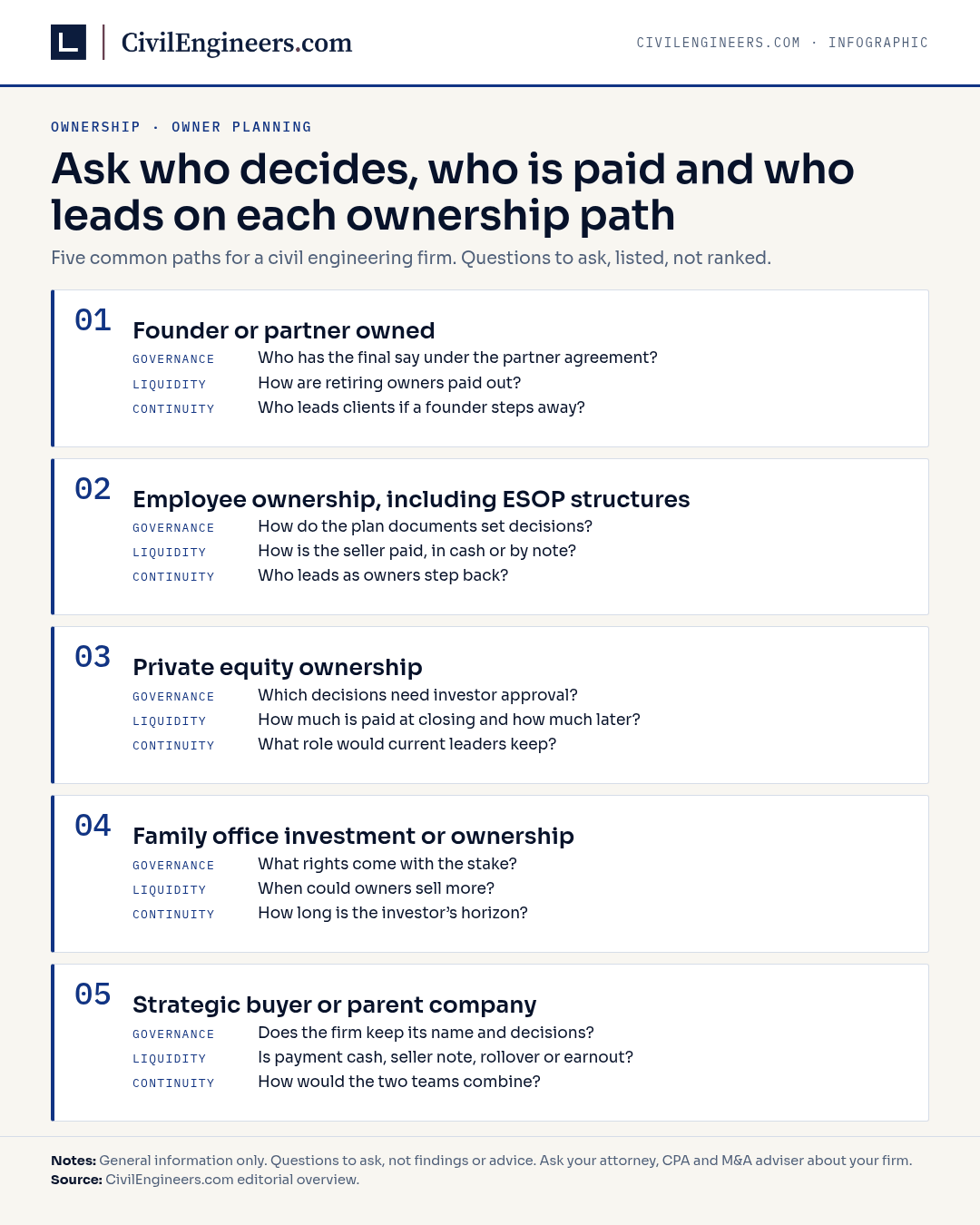
Employee ownership covers several structures through which employees hold an interest in the firm. These can include an ESOP, direct share ownership, options, or other arrangements, each with different eligibility, tax, voting, transfer, and payout terms. The label does not explain who makes operating decisions, how shares are valued, or when an employee may receive proceeds. Firms may use the term differently based on the legal structure and whether ownership is direct or held through a plan or trust. Employee ownership is not necessarily equal ownership, employee control, or an immediate cash benefit. Owners setting up or communicating a structure typically distinguish the ownership interest from compensation and explain the governing documents. The National Center for Employee Ownership provides general information, and the guide to preparing employees for an ownership transition addresses the transition context.
How owners use it
- Owners describe the structure and rights so staff understand how participation, voting, and potential proceeds work.
- A firm compares an ESOP with direct share ownership and other transition structures using its governance and financial goals.
- If 10 employees each receive 2 shares, the allocation totals 10 × 2 = 20 shares, while voting and value depend on the plan or agreements.
- Leaders distinguish employee ownership from ordinary pay, bonuses, and participation in management.

