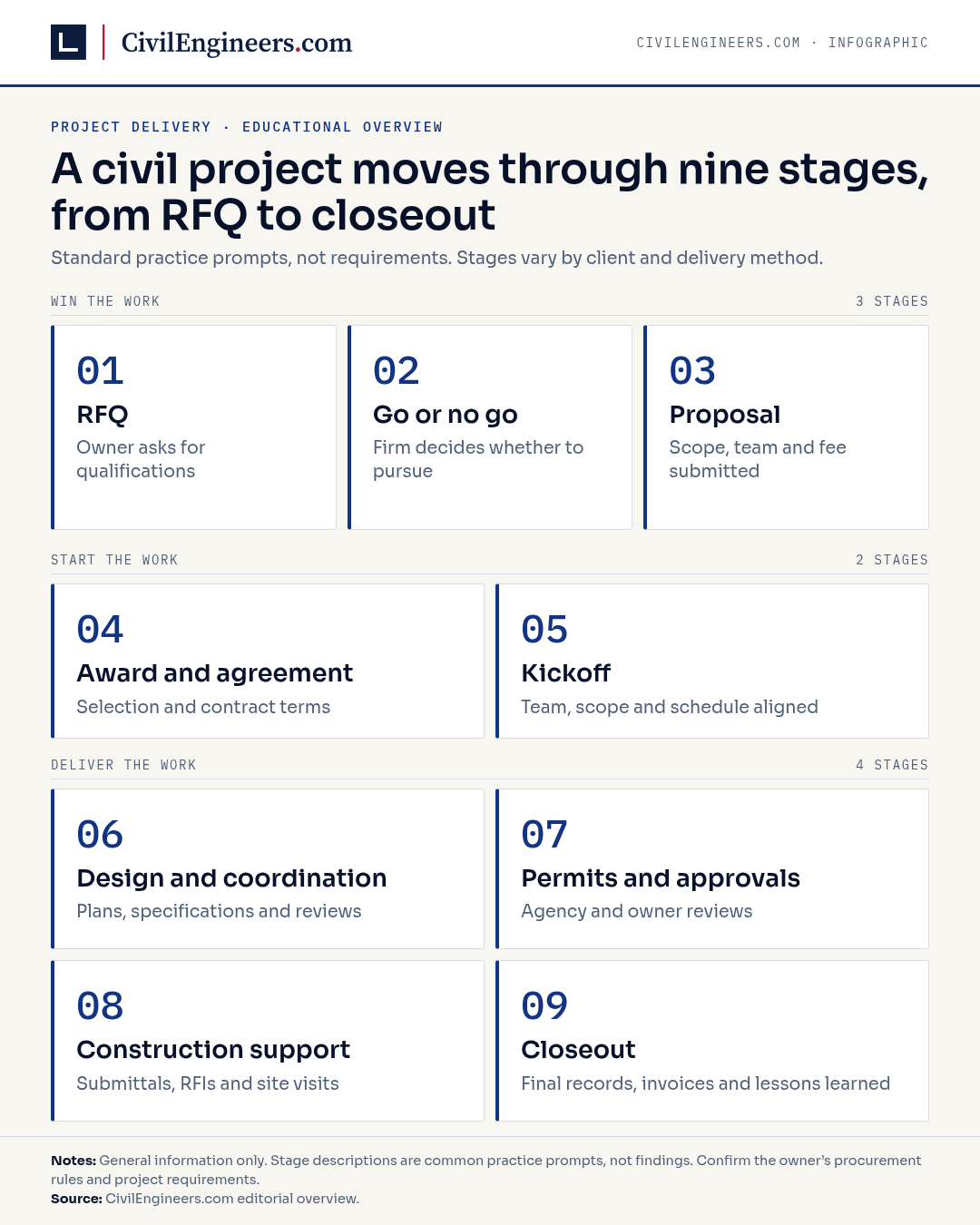
Project closeout completes outstanding project tasks, delivers final records, confirms financial status, and transitions remaining responsibilities.
Definition
Project closeout is the set of activities used to finish a project and document its status. Depending on the agreement and project, it can include delivering final plans or reports, resolving open review comments, confirming required approvals, organizing records, issuing final invoices, and recording lessons learned. The client, contract, and applicable requirements determine which deliverables and records are needed. Firms may use a checklist, project management workflow, or owner review, and may define financial closeout separately from technical closeout. Closing a project helps the firm confirm what was delivered, what remains open, and whether billing and file retention tasks are complete. It is not simply the date design work stops, nor does it automatically settle every claim or guarantee payment. Owners can monitor closeout timing because unresolved records or invoices can affect cash collection and future project handoffs.
How owners use it
- Confirm final deliverables, open items, invoice status, and record retention responsibilities before marking a project closed.
- Use a consistent closeout checklist while adapting the required records to the contract and client.
- For example, a project has $4,000 in approved final fees and $3,000 invoiced, so the remaining amount to invoice is $4,000 - $3,000 = $1,000.
- Review overdue closeouts to identify unresolved approvals, records, or billing tasks.

